Ask ten people what they want from a necklace, and you'll get ten different answers. One wants a chain she can forget she's wearing. Another is shopping for a wedding and hopes every head in the room turns. A third simply wants something that won't catch in her dupatta.
That's the thing about necklaces. They're personal. A lab grown diamond necklace can suit all three of these people, but only if the style fits the life. Before you fall for a photo, work out what you'll wear it with, how often, and where.
Each of these styles behaves differently once it's around your neck. Some fade into the background, and some run the whole outfit. Read them with your own wardrobe in mind. A reputable diamond jewellery manufacturer or jeweller can also help you compare settings, metals and stone specifications.
The five styles below are a sensible place to begin.
| Necklace Style | Best For | Look | Best Occasions |
| Solitaire Pendant | Everyday wear | Minimal & elegant | Office, daily wear, dinners |
| Tennis Necklace | Statement sparkle | Glamorous & sophisticated | Parties, evenings, weddings |
| Halo Pendant | Extra visual presence | Classic & sparkling | Gifting, special occasions |
| Layered Chains | Casual styling | Modern & relaxed | Everyday wear, casual outings |
| Polki-Inspired Set | Traditional styling | Ornate & festive | Weddings, festivals, celebrations |
If you want one versatile diamond necklace, a solitaire pendant is a natural place to start. A single stone hangs from a slim chain, and that's the whole story. It goes to a Monday meeting and a Saturday dinner without any changes. The simplicity is also the test, because a poorly cut stone has nowhere to hide.
Layers easily with other chains, so you can build the look slowly
Sits well under high and round necklines where bigger pieces would crowd
For everyday wear, look for a well-made setting. Prong and bezel settings are both popular choices, with each offering a different balance of security and style.
Carat size changes the look more than anything else, so try on a few before you decide
A tennis necklace creates a continuous line of diamonds that follows the curve of the collarbone. It looks sharp with a crisp shirt and just as good with a silk saree. Because the sparkle comes from multiple diamonds rather than a single centre stone, the necklace creates a continuous play of light as you move. Some people find that easier to wear than a single pendant.
Stones should match in size, colour and cut, because uneven ones show up fast in a straight line
Look closely at the clasp and safety lock, since a necklace with this many links needs to hold together
Lengths around 16 to 18 inches are common for a closer-to-the-neck look, while longer lengths create a softer drape
Works for evenings out, and plenty of people wear it every day
The halo pendant places a centre diamond inside a ring of smaller stones. That ring does a clever job. It makes the pendant look larger than the centre stone alone, without pushing the carat weight up much. If you like a little presence but dislike heavy pieces, this one deserves a look.
Round and cushion centre stones are the most common choices
The small stones catch light from several angles, which gives the pendant a livelier look
Clean it regularly with a soft brush, because dust settles in the gaps between the stones
Makes a thoughtful gift, since it feels celebratory without being loud
Layered chains are the relaxed cousin of the family. You wear two or three fine strands at different lengths, and one of them carries a small diamond. The look is casual, almost accidental, which is exactly why it works. It's also a smart way to start if you aren't sure you want one big piece.
Leave enough space between the strand lengths to create definition and reduce tangling
Pair a plain chain with, the diamond one for contrast
Stick to a single metal tone, or the layers start to look messy
Store the chains separately, or you'll spend a Sunday evening untangling them
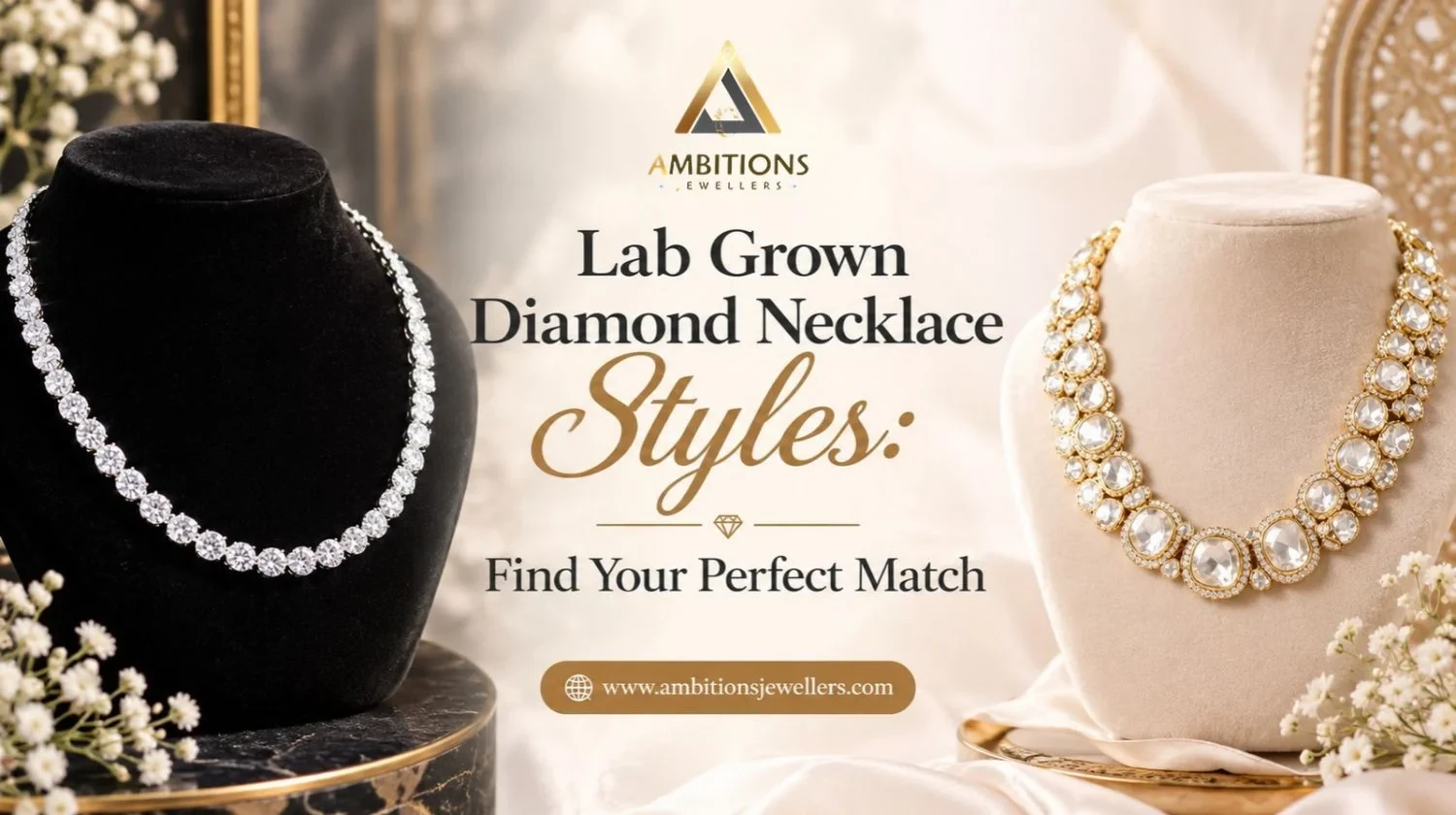
Polki has a special place at Indian weddings and festivals, and some makers now bring that traditional layout into diamonds. The result can combine traditional visual elements with a more contemporary approach to construction and styling. If you're considering a Polki-inspired bridal set, ask the manufacturer how the design, stones, metal and setting differ from traditional Polki jewellery. It's worth asking about if a bridal set is on your list.
Often sold with matching earrings, so ask about the full set from the start
Looks best on silk, brocade and heavier fabrics
Ask which metal and setting sit at the back, since that part touches your skin
Keep it in a soft pouch to protect the finish
When choosing a CVD diamond jewellery manufacturer, ask about the diamond growth method and what grading reports or documentation are provided for the stones. If the information isn't clear, consider another seller.
Buy the necklace you'll actually wear. It sounds obvious, yet plenty of people shop for one occasion and end up with a piece that lives in a drawer. Think about your necklines, your usual clothes and your daily routine first, then compare styles, metals and stone quality. Before buying, ask about the diamond's grading report, growth method, metal, setting and care requirements.
A good lab-grown diamond necklace should feel easy to wear and care for, and a reputable maker should be willing to answer your questions clearly.